
Public speaking for kids isn’t about perfect speeches. It’s about helping children share ideas clearly, use their voices with confidence, and treat an audience with kindness. Whether a child is giving a class presentation, joining the student council, doing show-and-tell, reading aloud, or simply asking for help, public speaking gives them a lifelong skill.
The good news: speaking skills grow with practice. With small steps, playful rehearsal, and steady encouragement, most children can learn to speak up, even if they feel shy now. As professional vocal coaches, we often remind families that public speaking is a trainable skill.
Kids don’t need to sound like adults. They need simple tools to organize their thoughts, use their voice, manage their nerves, and practice in front of safe audiences. This guide gives you age-appropriate strategies, low-pressure practice ideas, and simple fixes for stage fright. Use it at home, in class, or in after-school clubs.
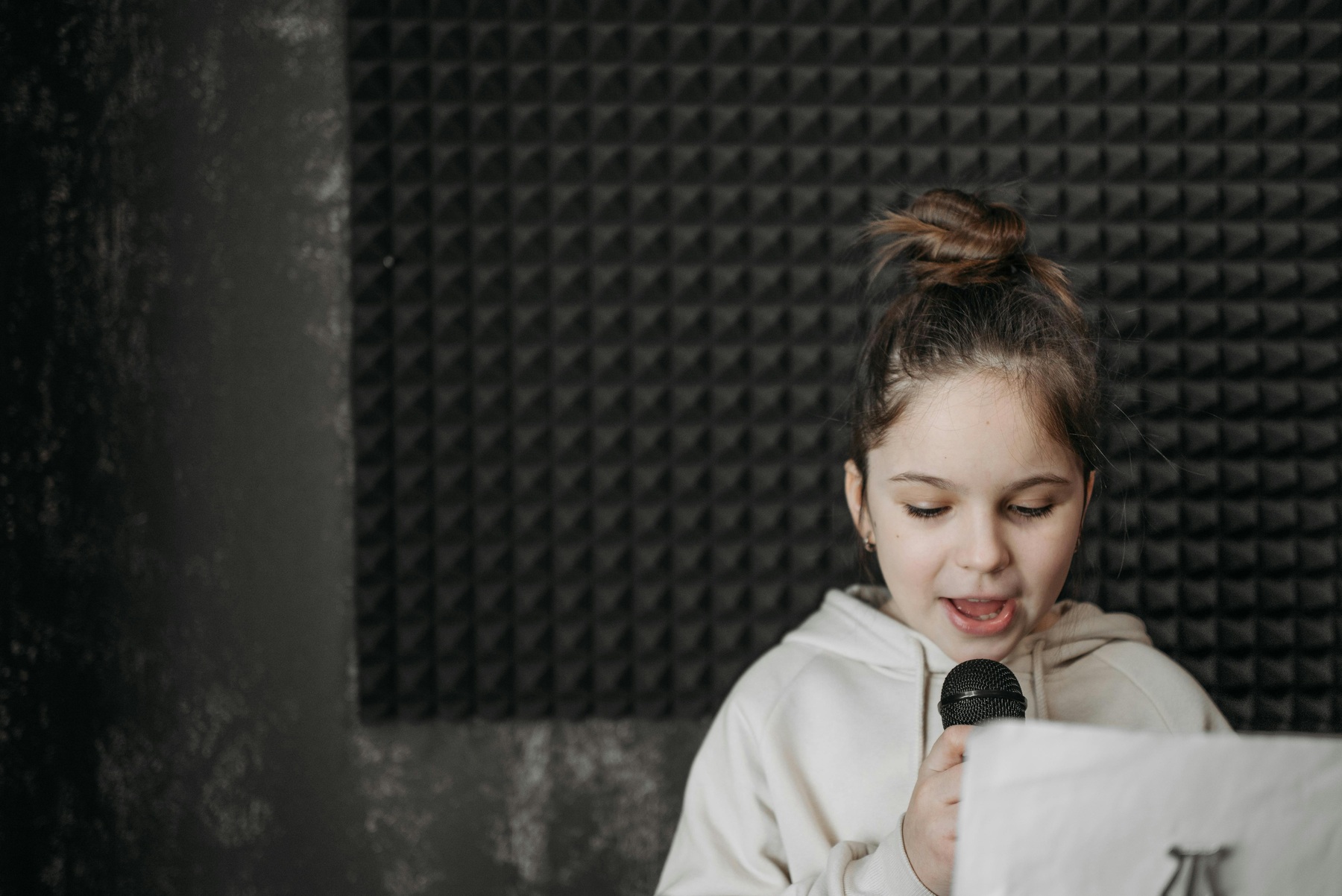
TL;DR
- Start tiny and build up. Practice one line at home, then a show-and-tell, then a short class update.
- Treat nerves as normal body alarms. Teach kids to breathe, label the feeling, and still do the thing.
- Use a simple structure with a hook, three points, and a clear close.
- Practice in front of a mirror, record short rehearsals, and gradually increase the audience from family to friends to small groups.
- Give specific, kind, and actionable feedback. Model it in front of the child.
- Teach kids how to recover if they forget a line, lose their place, or make a mistake.
- Offer real audiences through school standards, clubs, and youth programs when the child is ready.
- For extra support, families can explore Voiceplace public speaking and vocal coaching resources.
Why Public Speaking Matters for Children
Public speaking for kids means sharing ideas out loud with a listener in mind. It shows up in class discussions, science fairs, student councils, book talks, assemblies, and everyday life, like ordering food, asking a teacher a question, or explaining a problem to a friend.
Schools in the United States include speaking and listening across grades, so practicing at home reinforces what children will do in class. Beyond grades, speaking builds social and emotional skills.
Kids learn to organize thoughts, read a room, listen to feedback, and handle mild stress safely. Those gains later help with leadership, teamwork, confidence, and problem-solving.
What Kids Need Before They Speak Up
Building a strong foundation early on transforms a child’s natural anxiety into a calm, focused willingness to share their thoughts. When young speakers learn to anchor themselves before addressing a room, they develop a lifelong gift of presence that serves them well from classrooms to global stages.
Core Building Blocks
Cultivating these specific habits early prevents frustration, turning scary speech assignments into moments of proud self-expression and connection.
- Language basics: Vocabulary, sentence sense, and taking turns. If you’re concerned about a child’s speech or language, get guidance from a speech-language pathologist.
- Audience awareness: Who is listening and what they care about.
- Structure: A hook, body, and a close. For kids, this can be as simple as: “Here is my topic, here are three things to know, and here is what I want you to remember.”
- Delivery habits: Eye contact, clear voice, steady pace, natural gestures, and enough volume to reach the back of the room.
- Voice confidence: Children should learn that their voice is part of the message. A clear, steady voice helps an audience understand them and helps the child feel more in control.
Before kids worry about being “good speakers,” help them notice three things: volume, pace, and clarity. A child who speaks a little louder, slows down, and finishes words clearly will usually sound more confident right away.
A Quick Note on Development
Communication grows in stages. If a child is still meeting early speech or language milestones, fold speaking practice into play and daily routines. For worries about stuttering, articulation, or language delays, consult professional resources and your pediatrician or a speech-language pathologist.
Public speaking practice should feel supportive, not corrective. The goal is to build confidence while respecting the child’s developmental stage.
How to Teach Public Speaking Without Tears
This supportive method preserves a child’s joy and natural curiosity, showing them that sharing their voice can be an exciting adventure rather than a source of stress.
Use an Exposure Ladder
Exposure means meeting a challenge in small, safe steps so confidence catches up to courage. Build a ladder from easiest to hardest and climb one rung at a time. Example rungs:
- Record a voice memo.
- Practice one sentence in front of a mirror.
- Tell a joke to a parent.
- Read a paragraph to a pet.
- Explain a Lego build to a sibling or friend.
- Share a 30-second update at dinner.
- Give a one-minute talk to the family.
- Practice with two friends.
- Present to a small group.
- Deliver a short talk to the class.
This gradual increase in audience size helps kids build eye contact, volume, and confidence without feeling thrown into the deep end. Tips for ladders:
- Keep rungs short and specific.
- Repeat a rung until it feels boring, then move up to the next.
- Pair each rung with one skill focus, such as a slower pace or stronger eye contact.
- Celebrate effort, not just performance.
Coach the Body, Then the Words
Nerves are normal. Teach kids to:
- Name it: “My body feels buzzy. That is excitement and nerves.”
- Breathe low and slow: Inhale for 4, exhale for 6, three times.
- Plant and release: Feet hip-width, unlock knees, shake out hands.
- Start strong: Speak the first sentence a touch louder and slower.
A strong first sentence matters because it gives the child momentum. Even if the rest of the talk feels shaky, a prepared opening helps them start on a strong footing.
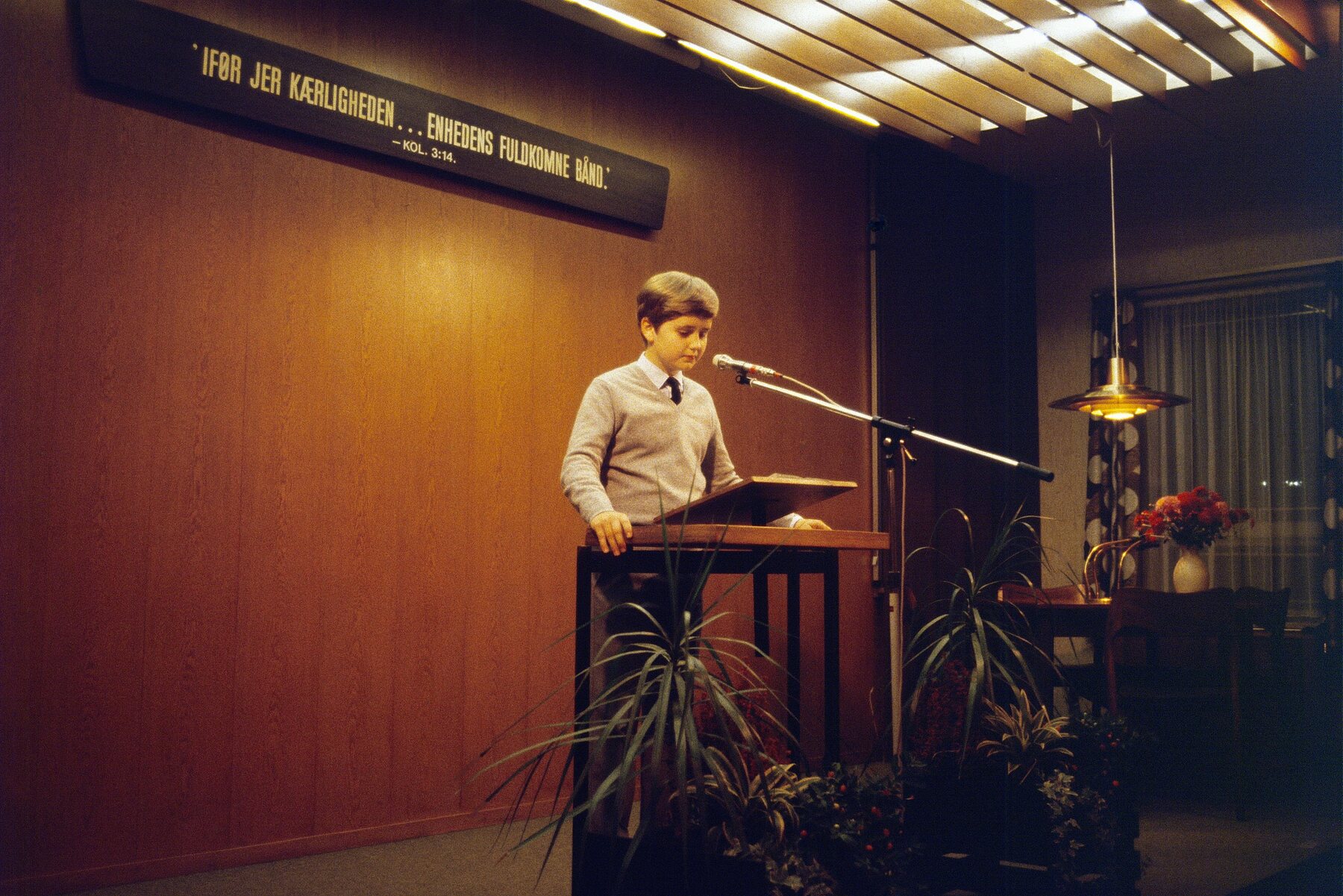 Practice in a Mirror or on Video
Mirror practice and short recordings are simple, useful tools for kids’ public speaking. A mirror helps children notice posture, facial expression, and gestures. A recording helps them hear pace, volume, and filler words.
Keep it light. Don’t replay the video over and over or point out every mistake. Watch once, choose one improvement, and try again the next day. For example:
- “This time, let’s make the first sentence louder.”
- “This time, let’s pause after the joke.”
- “This time, let’s look up at the end of each note card.”
Give Feedback Kids Can Hear
Try the feedback sandwich: one specific strength, one specific fix, one encouraging next step.
Replace “Good job” with: “Your pause after the joke helped us laugh. Next time, face the back row more. I want to hear this story again.”
Helpful feedback is specific, kind, and small enough to use immediately.
Teach Kids What to Do When They Make A Mistake
One of the most important public-speaking skills for kids is learning to recover. Children often fear that forgetting a line or making an error will ruin everything. It will not. Give them simple recovery phrases:
- “Let me try that again.”
- “I lost my place for a second.”
- “The next thing I want to share is…”
- “That came out funny. What I meant was…”
Also teach them to pause, breathe, and continue. A short pause feels much longer to the speaker than it does to the audience.
Mistakes aren’t emergencies. A calm pause can make a child look more prepared, not less. Practice mistake recovery on purpose during rehearsal so kids know what to do before it happens in real life.
The Best Practice Settings for Kids
Use this quick comparison to pick where to start and what to emphasize.
| Practice Setting | Best For | What It Builds | How To Do It |
| Solo practice: mirror, recording, or voice memo | New or anxious speakers | Awareness of pace, filler words, posture, and volume | 30-60 seconds; replay once; choose one improvement only |
| Family practice | Early confidence-building | Comfort, clear starts, and basic volume | Give a 1-minute dinner update or read a short paragraph aloud |
| Small group: friends, table team, or siblings | Most kids | Eye contact, turn-taking, natural gestures, and audience awareness | 1-2 minutes; peer compliments plus one suggestion |
| Real audience: class, club, community, or assembly | Ready speakers | Projection, timing, Q&A, and confidence under pressure | 2-3 minutes; clear open/close; one visual; short Q&A |
Simple Talk Formats Kids Can Master
Kids do better when they have a format. Start with topics they already care about, such as favorite hobbies, animals, sports, books, games, family traditions, or a memorable trip.
Show and Tell
Object, why it matters, one cool detail, closing line.
Example: “This is my soccer medal. I earned it after my first tournament. My favorite moment was when our team scored in the last minute.”
How-To Demo
Goal, 3 steps, safety tip, recap.
Example: “Today I’ll show you how to care for a pet fish.”
Book Talk
Title and author, what it is about, favorite moment, who would like it.
Example: “You might like this book if you enjoy mysteries and funny characters.”
Opinion Talk
Claim, reason 1, reason 2, example, call to action.
Example: “I think every classroom should have a reading corner.”
Story
Setting, problem, what changed, ending.
Example: “On our trip to the beach, I learned why you should never turn your back on a wave.”
Helping Different Ages
Whether a child is a shy grade-schooler or an energetic pre-teen, a customized approach enables kids to receive the exact style of encouragement that resonates with their current experience.
Early Elementary: K-2
Keep talks under one minute with strong visuals and props. Let kids practice lines while moving, as motion helps memory. Celebrate volume and clear starts. Good practice ideas:
- Show-and-tell with one object.
- Reciting a short poem to family.
- Saying one sentence about a drawing.
- Telling a favorite animal fact.
Upper Elementary: Grades 3-5
Teach the hook: a question, fact, or short story. Introduce note cards with keywords only. Add a friendly Q&A with two planned questions. Good practice ideas:
- A 60-second book talk.
- A how-to demo.
- A short opinion speech.
- A small-group presentation before a class presentation.
Middle School: Grades 6-8
Coach the argument structure and simple slides. Practice impromptu prompts for 30-60 seconds. Add peer feedback rubrics with 3-4 clear criteria. Good practice ideas:
- A science fair explanation.
- A persuasive speech.
- A group presentation.
- A student council pitch.
- A short debate with respectful listening rules.

Handling Stage Fright Safely
Stage fright can feel like a racing heart, sweaty palms, stomach butterflies, or a shaky voice. Normalize it, as bodies do this when we care. Use a plan:
- Breathe.
- Plant your feet.
- Say the first sentence slower and louder.
- Find one friendly face.
- Keep going, even if it’s not perfect.
Build practice gradually and keep wins visible on a progress chart. If fear blocks schoolwork or daily life for weeks, talk with a pediatrician or a mental health professional to discuss next steps.
How Voice Training Helps Public Speaking for Kids
Public speaking isn’t only about what a child says. It’s also about how they use their voice. Voice training can help kids work on:
- Speaking loudly without yelling.
- Slowing down without sounding robotic.
- Using pauses so ideas land.
- Finishing words clearly.
- Sounding confident even when they feel nervous.
- Matching tone to the message.
At Voiceplace, public speaking and vocal coaching focus on helping speakers use their natural voice more effectively. For children and teens, that can mean building comfort, clarity, and confidence one small step at a time.
Parents who want more support can explore professional guidance from our vocal coaches, including solo training options.
Where to Find Real Audiences
Look for school opportunities that match grade-level speaking and listening goals. Community options include library story hours, science fairs, student councils, drama clubs, debate clubs, and youth programs that focus on communication and leadership.
Some organizations run short courses or clubs specifically designed for children and teens. Start with safe audiences first: family, friends, table groups, or a favorite teacher. Then move toward larger or more formal audiences when the child is ready.
Examples
These relatable journeys inspire hope, demonstrating that even the quietest kids can blossom into confident communicators who can hold the attention of any room.
From Shy to School Announcer
Lina, age 8, avoided reading aloud. Her family built an exposure ladder: whisper a poem to mom, read it to dad, record it for grandma, then read two lines to the class pet during indoor recess. After two weeks, Lina delivered a 45-second book talk to her table group.
A month later, she practiced a louder first line and read the lunch menu on the school intercom with a buddy. The biggest change wasn’t that Lina became fearless. It was then that she learned how to feel nervous and still speak.
The Science Fair Pitch
Diego, 12, loved experiments but rushed his words. His teacher set one target per week: week 1: posture; week 2: slower pace; week 3: eye contact; week 4: clear, close.
He rehearsed a three-part story: problem, method, result. He practiced with two classmates, then presented to another class before the fair. On event day, he handled questions by restating each one first, which gave him time and kept his answers clear.
Actionable Steps / Checklist
Having a clear, structured list of small tasks gives families a stress-free way to practice and measure daily progress at home.
- Pick a purpose, whether it’s to inform, to explain how-to, to persuade, or to tell a story.
- Choose a kid-friendly topic, such as a favorite hobby, animal, book, sport, game, or memorable trip.
- Draft a one-page plan, including a hook, 3 points, and a close.
- Write keywords, not full sentences.
- Build a 5-rung exposure ladder and rehearse 5 minutes a day.
- Practice once in front of a mirror.
- Record once, watch for one fix, and then re-record tomorrow.
- Rehearse the open and close 3 times. They carry the talk.
- Add one visual, including a prop, photo, or simple sketch.
- Practice a calm start: use 3 breaths, plant your feet, and start the first line louder and slower.
- Practice a mistake-recovery phrase, such as “Let me try that again.”
- After each talk, log one win and one micro-goal for next time.
- Schedule a real audience within 2 weeks, like a table group, family, friend group, or club.
- If speech or anxiety concerns persist, consult a pediatrician or speech-language pathologist.
- For professional public speaking or voice guidance, start with a vocal assessment and training.
Professional Vocal Assessment
If your child or teen struggles with volume, confidence, pace, or vocal clarity, a short assessment can help identify the biggest opportunity for improvement.
Voiceplace offers assessments and classes designed to help speakers identify their biggest vocal challenge and understand what to work on next. This can be a helpful next step for parents who want more personalized guidance beyond at-home practice.
Glossary
Familiarizing yourself with common terms demystifies the training process and gives families a shared vocabulary to celebrate small breakthroughs.
- Hook: A short opener that grabs attention with a question, fact, or story.
- Exposure Ladder: A series of small, planned steps that gradually increase the speaking challenge.
- Stage Fright: Normal body reactions, like a fast heartbeat, that show up before a performance.
- Note Cards: Small cards with keywords to guide a talk without reading full sentences.
- Delivery: How a speaker uses voice, pace, posture, and gestures.
- Q&A: A short question period after a talk.
- Feedback Sandwich: One strength, one fix, and one next step, in that order.
FAQ
At what age should kids start public speaking?
Children can practice as soon as they can share a short idea. Keep it playful and brief, then lengthen with age and confidence.
How do I help a child who refuses to speak in front of others?
Return to an easier rung on the ladder, practice privately, and step up slowly. Start with a parent, pet, mirror, or recording before moving to friends or small groups. If distress blocks school or daily life, seek professional guidance.
Should kids memorize speeches?
Memorize the opening and closing lines. Keep the middle to keywords so delivery sounds natural.
Are contests a good idea?
Contests can motivate some kids to practice public speaking. Use them only when the child shows interest and has practiced in smaller settings first.
What if a child forgets a line during a speech?
Teach them to pause, breathe, and use a recovery phrase like “Let me try that again” or “The next thing I want to share is…”. Forgetting a line is normal and does not ruin the speech.
What are good public speaking topics for kids?
Good topics for public speaking include favorite hobbies, animals, sports, books, games, family traditions, science projects, places they have visited, or a memorable trip.
What if a child stutters or has speech delays?
Work with a speech-language pathologist to develop individualized strategies and coordinate with teachers so practice remains supportive and safe.
Can vocal coaching help kids with public speaking?
Yes. Vocal coaching can help children and teens improve volume, pace, clarity, breath support, confidence, and delivery. For families who want professional guidance, Voiceplace offers public speaking and voice training resources.
Final Thoughts
Public speaking for kids is a long game. Keep steps small, celebrate progress, and help children connect speaking with curiosity, confidence, and service.
The goal isn’t to create a perfect performer. The goal is to help a child think clearly, speak kindly, use their voice well, and recover when things do not go exactly as planned.
With steady practice, safe audiences, and kind coaching, most kids can find a clear, confident voice. For families who want extra support, professional vocal coaching can help children and teens build stronger speaking habits one step at a time.